
Twenty-Five Years Sparked by a Packet of French Powder
In June 1998, Hu Wenfeng was a young teacher in the field of microbiology at South China Agricultural University. That day, he suffered from food poisoning—abdominal pain, fever, diarrhea, needing to rush to the bathroom every 15 to 30 minutes, accompanied by blood in his stool. In less than 24 hours, due to dehydration and a drop in blood pressure, he was rushed to the emergency department.
The hospital followed standard procedures: replenishing fluids with glucose and saline, injecting antibiotics, and fasting for three days. At the same time, they ruled out viral infections and severe infectious diseases like cholera, and finally diagnosed him with bacillary dysentery.
For the first two days in the hospital, his symptoms did not improve significantly. On the third day, a friend from Macau came to visit and brought a packet of French-made probiotic powder, with the Chinese name “Leta”—inactivated lactic acid bacteria. Insisting on his friend’s advice and with the doctor’s approval, he skeptically mixed two packets (about 2 grams) with warm water.
One hour later, the interval between bathroom visits stretched from every 15–30 minutes to every 1–2 hours;
Four hours later, he took another packet;
Eight hours later, the diarrhea stopped completely, the abdominal pain disappeared, and the blood in his stool was gone.
As a microbiology scholar, his education had taught him: only live probiotics can colonize, multiply, and function in the gut. How could inactivated, dead bacteria possibly be effective?
But that night, lying in the hospital bed, he doubted this “common knowledge” for the first time. After being discharged, the first thing he did was initiate the R&D of inactivated lactic acid bacteria. And he has been doing it for twenty-five years.
From the Laboratory to the Production Line: A Technological Route Validated for a Quarter of a Century
From 1998 to 1999, the team started from the isolation, purification, and identification of lactic acid bacteria, step by step exploring culture conditions, inactivation processes, and dosage form design.
In 1999, they published their first paper on inactivated lactic acid bacteria.
In 2007, they obtained their first patent authorization for inactivated lactic acid bacteria; the first inactivated lactic acid bacteria feed additive “Yilesu” was launched—which is today’s Yuanshengsu.
In 2016, the team extended the technology to the food sector, launching the human-use inactivated lactic acid bacteria solid beverage “Yikefu”; in the same year, they reached a deep cooperation with Weikang Probiotics (Suzhou) Co., Ltd. to jointly conduct basic research and application promotion of postbiotics in the food sector.
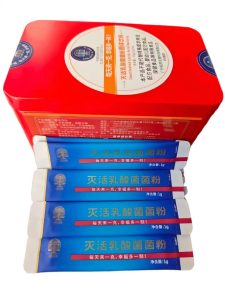
In 2021, two milestones arrived simultaneously:
- The International Scientific Association for Probiotics and Prebiotics (ISAPP) released a consensus statement, officially defining “Postbiotics” as “preparations of inanimate microorganisms and/or their components that confer a health benefit on the host.” From the question on the hospital bed in 1998 to the international academic community giving it an official name in 2021, this journey took twenty-three years;
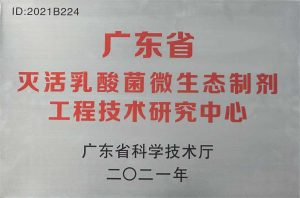
- BioSource was approved to establish the “Guangdong Province Engineering Technology Research Center for Inactivated Lactic Acid Bacteria Microecological Preparations.”
In 2022, with “postbiotics” as the technological cornerstone, the team launched a series of functional microecological preparations for farming sites.
In 2023, a joint venture, Shenzhen Xianda Postbiotics Biotechnology Co., Ltd., was established with Weikang Probiotics, focusing on the application of postbiotics in food; they developed the “fermented water” solution to reduce costs and increase efficiency.
In 2024, they promoted the technical solutions of “fermented water” and fermented raw materials, innovating livestock and poultry farming models.
In 2025, they joined hands with Guangxi Zhonghuan to create the “BioSource · Zhonghuan Sour Soup” ecological farming model.
Today, what does BioSource’s postbiotics business represent?
- An R&D team deeply engaged in inactivated lactic acid bacteria for twenty-five years;
- High cell-density fermentation technology;
- A ton-level automated production line;
- The Shandong fermentation base with three 50-ton fermentation tanks, supporting large-scale fermentation and strain production;
- An R&D laboratory equipped with HPLC, GC, Atomic Absorption Spectrometer, Real-Time PCR, and other instruments, with a total investment of over 4 million yuan;
- ISO 9001, ISO 22000, EU FAMI-QS three-system certifications, as well as US FDA registration;
- Yuanshengsu was awarded “Guangdong Famous Brand (Agricultural) Product,” and related achievements won the “Second Prize of Guangdong Province Agricultural Technology Promotion Award”;
- Postbiotic products are exported to Thailand, South Korea, and Southeast Asian markets.
Why Postbiotics?
A postbiotic is not a single substance, but a complex system composed of inactivated microorganisms, bacterial cell components, and metabolites. Compared with live probiotics, it has several natural advantages:
- Stable: Resistant to stomach acid, bile, and high-temperature processing; does not require a cold chain; long shelf life;
- Safe: The bacterial cells are inactivated, so they will not excessively colonize the gut or spread to the environment;
- Easy to use: Can be used simultaneously with antibiotics, butyrate, and other live bacterial preparations without mutual antagonism;
- Different mode of action: It does not rely on “competing for territory,” but rather regulates gut flora, strengthens the intestinal mucosal barrier, and regulates immunity through preserved metabolites (lactic acid, bacteriocins, exopolysaccharides, etc.).
The question on that hospital bed over twenty years ago now has a complete scientific answer.
What We Want to Do
The postbiotic industry is entering an explosive period. What BioSource wants to do is not just to sell products, but to make the term “postbiotics” recognized by more people, just like “probiotics” twenty years ago.
Starting from those two packets of French powder in 1998, we believe in one thing:
The power of microorganisms does not necessarily have to be exerted while they are alive.